

When your lawn starts turning brown and crunchy under the heat of a drought, it’s tempting to reach for fertilizer to “green it up.” But hold off—fertilizing during a drought is one of the worst things you can do for your lawn. Not only does it stress already struggling grass, but it also opens the door for opportunistic weeds like nutsedge and crabgrass to take over.
In this post, we’ll explain why fertilizing during a drought is harmful and which weeds are likely to creep in while your lawn is dormant.
Why Fertilizing During a Drought is a Mistake
Fertilizer encourages growth—and growth requires water. When your lawn is under drought stress, it doesn’t have the resources to support new growth. Here’s what happens when you fertilize anyway:
1. You Stress the Grass Even More
Applying fertilizer to a lawn with dry, brittle soil is like trying to run a marathon on no sleep and an empty stomach. Fertilizer demands that the plant grow—but without water, it can’t. The result? Burned, damaged grass that may not recover.
2. You Waste Fertilizer (and Money)
Without moisture, fertilizer sits on the soil surface. It can’t be absorbed properly by grass roots and may either evaporate or get washed away in the next rain, leading to runoff and potential pollution.
3. Dormant Grass Doesn’t Need Feeding
Many grass types go dormant during droughts as a natural survival response. They turn brown, but they’re not dead. Feeding a dormant lawn is pointless—it’s not growing, so it doesn’t need nutrients. It just needs enough water to stay alive underground.
What You Should Watch For Instead: Weeds That Thrive in Drought
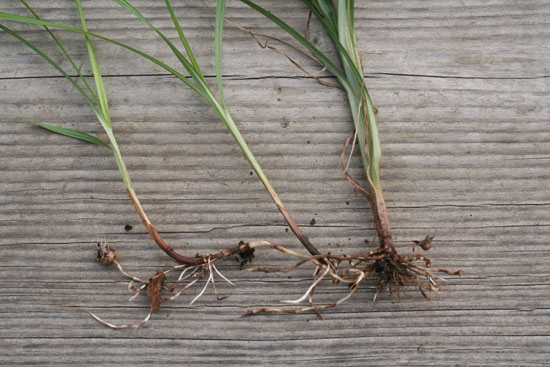
While your lawn sleeps, weeds see opportunity. Bare patches and weakened grass give aggressive weeds the upper hand. Here are a few to watch out for:
1. Nutsedge (Also Called Nutgrass)
- What It Looks Like: Bright green, glossy leaves growing faster and taller than your grass. Often found in moist or compacted soil.
- Why It’s a Problem: It spreads underground through tubers (“nutlets”) and can quickly take over weakened lawns. It’s very drought-tolerant once established.
- Control Tip: Pull it early, and spot-treat with a nutsedge-specific herbicide if needed. Avoid disturbing the soil too much, as that can encourage new growth.
2. Crabgrass
- What It Looks Like: Sprawling, low-growing grass with wide blades and seed heads that resemble fingers.
- Why It’s a Problem: It thrives in sunny, dry spots where your lawn has thinned out. Once it seeds, it comes back stronger the next season.
- Control Tip: Mow high to shade the soil and use pre-emergent herbicides in spring to prevent future outbreaks.
3. Spurge and Other Broadleaf Weeds
- Why They Thrive: Like crabgrass, they take advantage of thin or bare spots in drought-damaged turf.
- Control Tip: Keep an eye on these and remove by hand or use spot treatments—but only when temperatures are mild enough not to cause more damage to the lawn.
What You Should Do During a Drought Instead
- Water strategically (deeply and infrequently) to maintain root health.
- Mow high to shade the soil and protect the roots.
- Hold off on fertilizing until the weather cools and rain returns.
- Monitor for weeds and pull them before they seed.
- Mulch or compost lightly to enrich soil without overstimulating growth.
Conclusion:
It may seem counterintuitive, but one of the best things you can do for your lawn during a drought is nothing at all—at least when it comes to fertilizing. Let your grass rest, monitor for weeds like nutsedge, and plan for a recovery strategy when conditions improve. Patience, not fertilizer, is your lawn’s best friend during dry times.
Disclaimer:
The information provided in this blog post is for general informational purposes only. While we strive to provide accurate and up-to-date content, we make no guarantees about the completeness, reliability, or accuracy of the information presented. Always check local regulations, weather conditions, and consult professional sources or experts before acting on any advice found online. We are not responsible for any errors, omissions, or outcomes resulting from the use or misinterpretation of this content. Use your own judgment and proceed at your own risk.